
How Modern Automation is Transforming the Rubber Manufacturing Industry
The rubber manufacturing industry has evolved significantly over the past decade. Rising production demands, increasing quality standards, labor challenges, and the need for greater efficiency have encouraged manufacturers to adopt modern automation technologies throughout their production facilities.
From intelligent mixing systems and automated extrusion lines to PLC-controlled hydraulic presses and smart monitoring solutions, automation is helping rubber manufacturers achieve higher productivity, better product consistency, and reduced operating costs. Companies that embrace these advancements are better positioned to compete in today’s rapidly changing industrial landscape.
⚙ What is Automation in Rubber Manufacturing?
Automation refers to the use of advanced control systems, sensors, software, and machinery to perform manufacturing processes with minimal manual intervention.
Modern automated systems can monitor, control, and optimize various production parameters such as:
- Temperature
- Pressure
- Mixing cycles
- Extrusion speed
- Material feeding
- Product dimensions
- Energy consumption
This level of control allows manufacturers to maintain consistent quality while improving overall operational efficiency.
🏭 Why Automation is Becoming Essential
Traditional manufacturing methods often rely heavily on manual operations and operator experience. While skilled operators remain important, manual processes can introduce variations that affect product quality and production efficiency.
Automation helps eliminate these inconsistencies by ensuring that critical production parameters remain within specified limits throughout the manufacturing process.
As customer expectations continue to rise, manufacturers are increasingly turning to automation to maintain competitiveness and improve profitability.
📈 Increased Production Efficiency
One of the biggest advantages of automation is the significant improvement in production efficiency.
Automated systems can:
- Reduce cycle times
- Minimize production delays
- Increase machine utilization
- Improve material handling
- Optimize production scheduling
As a result, manufacturers can produce more products within the same operating period while maintaining consistent quality standards.
🎯 Improved Product Consistency
Consistency is critical in rubber manufacturing. Even small variations in temperature, pressure, or material distribution can affect the performance of the final product.
Automated control systems continuously monitor production conditions and make adjustments in real time to maintain optimal process parameters.
Benefits include:
- Uniform compound quality
- Accurate product dimensions
- Improved surface finish
- Reduced rejection rates
- Better customer satisfaction
🤖 Automation in Rubber Mixing Operations
Mixing is one of the most important stages of rubber processing, and automation has significantly improved this process.
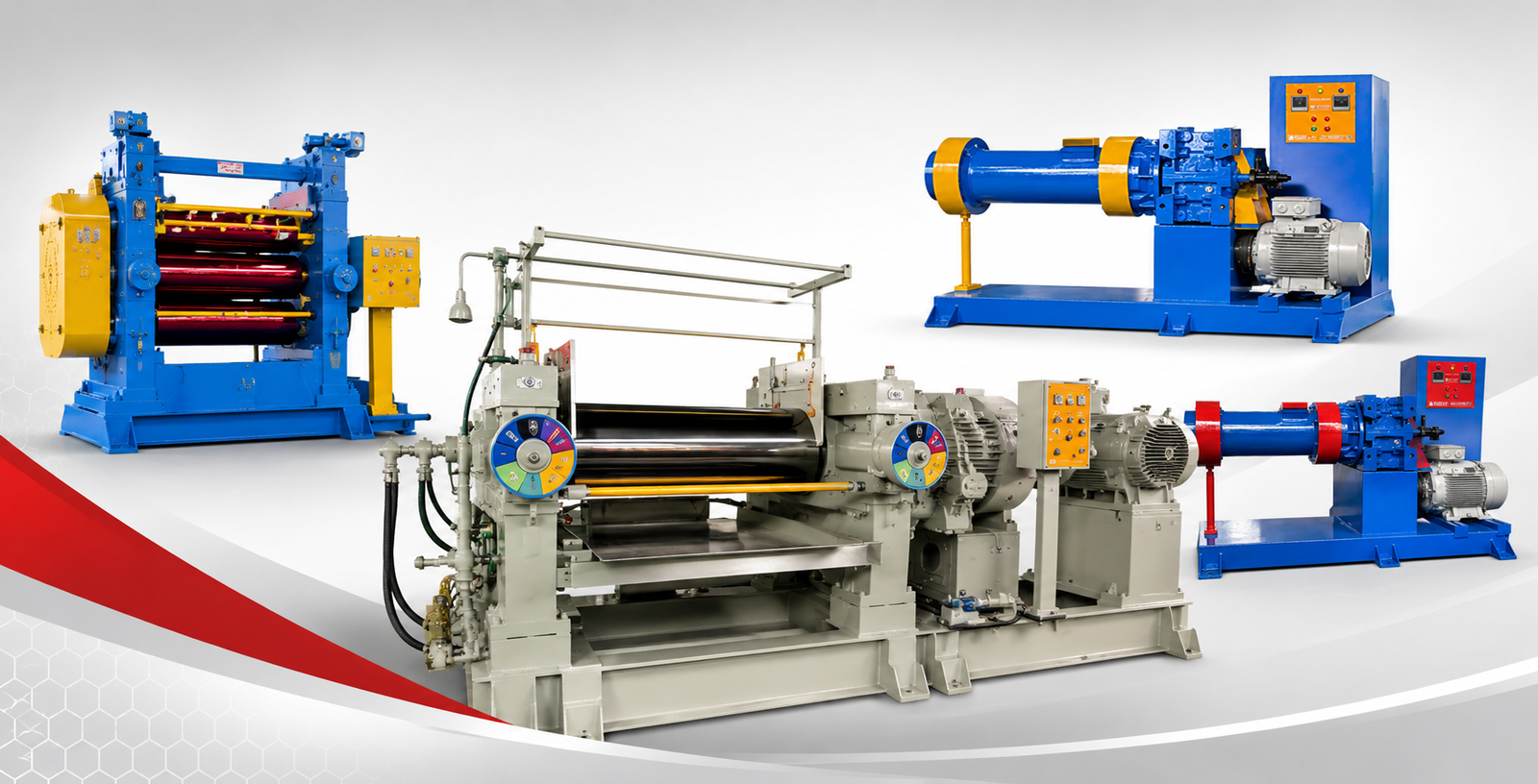
Modern Dispersion Kneaders and Mixing Mills can be equipped with:
- PLC-based controls
- Automatic timing systems
- Temperature monitoring
- Recipe management systems
- Batch data recording
These features help ensure repeatable mixing performance and consistent compound quality across every production batch.
🚀 Smart Extrusion Technology
Extrusion processes require precise control of speed, temperature, and pressure to achieve high-quality output.
Modern Hot Feed Extruders utilize:
- Variable speed drives
- Digital temperature controls
- Pressure monitoring systems
- Automated feeding systems
These technologies improve extrusion stability while reducing material wastage and operator intervention.
🔧 Advanced Hydraulic Press Control
Hydraulic presses have also benefited greatly from automation technologies.
Today’s systems offer:
- Programmable curing cycles
- Automatic pressure control
- Temperature monitoring
- Digital timers
- Production data logging
These capabilities help manufacturers achieve consistent curing quality while reducing production errors and improving efficiency.
💻 The Role of PLC and HMI Systems
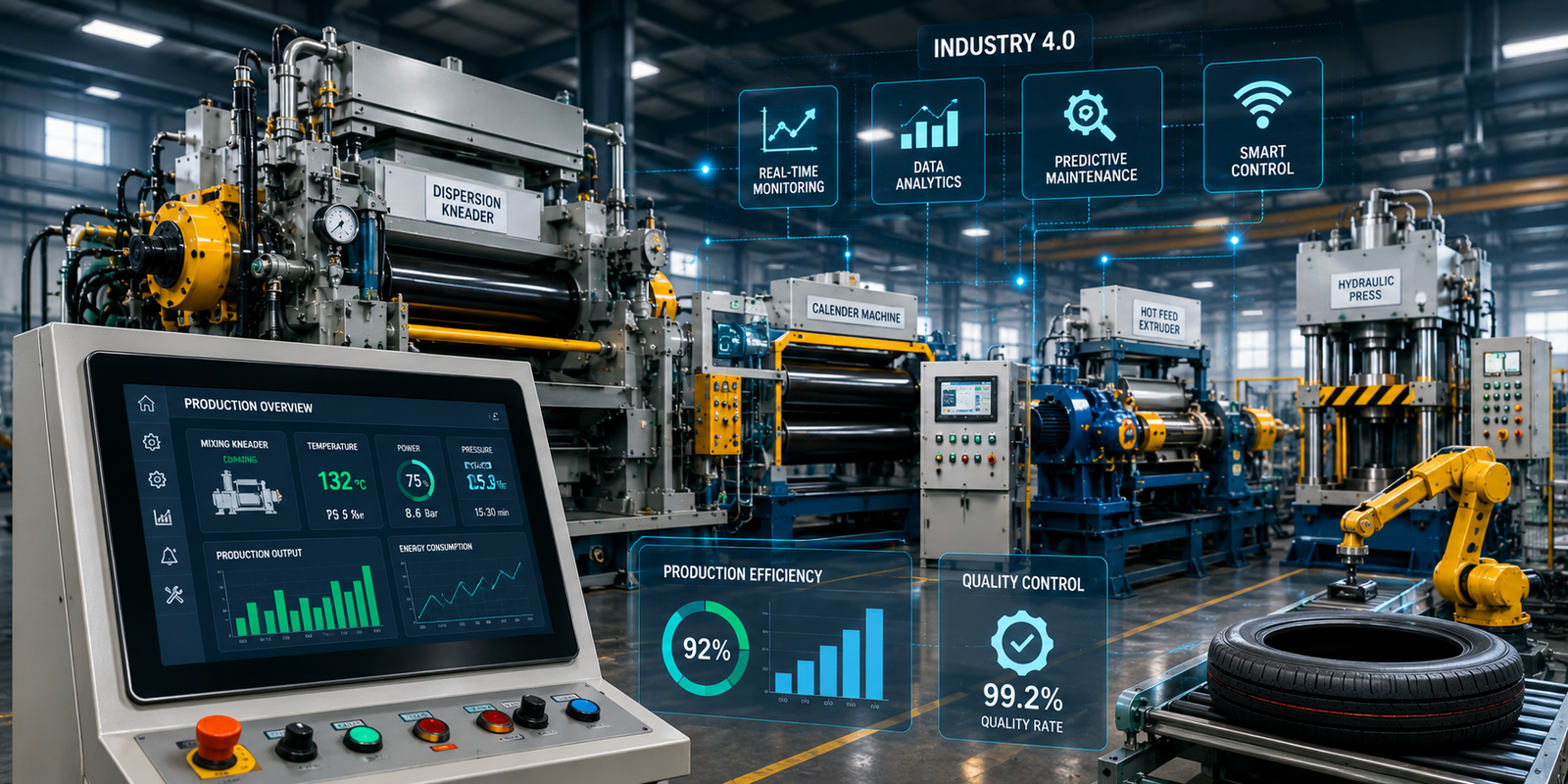
PLC (Programmable Logic Controller) and HMI (Human Machine Interface) technologies form the foundation of modern industrial automation.
These systems allow operators to:
- Monitor machine performance
- Adjust operating parameters
- Store production recipes
- Generate production reports
- Diagnose machine faults
User-friendly touch-screen interfaces simplify machine operation while providing valuable production insights.
⚡ Energy Efficiency Through Automation
Energy costs represent a significant portion of manufacturing expenses. Automation helps reduce unnecessary energy consumption through intelligent machine control.
Examples include:
- Automatic motor shutdown during idle periods
- Optimized heating cycles
- Load-based power management
- Smart hydraulic systems
These improvements help manufacturers reduce operational costs while supporting sustainability initiatives.
📊 Data-Driven Manufacturing
Modern automated machinery generates valuable production data that can be used to improve decision-making.
Manufacturers can analyze:
- Production output
- Machine efficiency
- Downtime trends
- Energy consumption
- Product quality metrics
Data-driven insights enable continuous improvement and help identify opportunities for increased productivity.
♻ Supporting Sustainable Manufacturing
Automation contributes to sustainability by reducing waste, improving material utilization, and optimizing energy consumption.
Benefits include:
- Lower scrap generation
- Improved material efficiency
- Reduced energy usage
- Better process control
- Lower environmental impact
As sustainability becomes increasingly important, automated manufacturing solutions play a crucial role in achieving environmental goals.
🌍 Future Trends in Rubber Manufacturing Automation
The future of the rubber industry will be shaped by emerging technologies such as:
- Industry 4.0 Integration
- IoT-Enabled Machinery
- Predictive Maintenance Systems
- Artificial Intelligence
- Remote Monitoring Solutions
- Cloud-Based Production Analytics
These technologies will further improve efficiency, reliability, and manufacturing flexibility.
✅ Conclusion
Automation is no longer a luxury in the rubber manufacturing industry—it has become a necessity for businesses seeking long-term growth and competitiveness.
From mixing and extrusion to molding and quality control, modern automation technologies help manufacturers improve productivity, reduce costs, enhance product quality, and achieve greater operational efficiency.
Companies that invest in advanced automation solutions today will be better prepared to meet future industry challenges and capitalize on new growth opportunities.
At Premier Rubber Machinery, we continue to integrate modern engineering and automation technologies into our machinery, helping manufacturers achieve higher performance, greater reliability, and long-term production success.