
How to Choose the Right Rubber Processing Machinery for Your Manufacturing Plant
The success of any rubber manufacturing operation depends heavily on the quality, efficiency, and reliability of the machinery used throughout the production process. Whether you are manufacturing tyres, conveyor belts, industrial rubber products, footwear components, hoses, profiles, or reclaim rubber, selecting the right equipment can significantly impact productivity, product quality, operating costs, and long-term profitability.
With a wide range of machinery available in the market, choosing the most suitable solution requires a clear understanding of your production requirements, material characteristics, and future growth plans. This guide will help manufacturers identify the key factors to consider when investing in rubber processing machinery and how the right equipment can improve overall production efficiency.
⚙ Understanding Your Production Requirements
Before selecting any machine, it is important to evaluate your production objectives. Factors such as daily output requirements, product specifications, material formulations, available factory space, and future expansion plans play a crucial role in determining the ideal equipment configuration.
A manufacturer producing automotive rubber components may require a different machinery setup compared to a reclaim rubber processing plant or a conveyor belt manufacturing facility. Understanding your specific production goals helps ensure that the selected machinery can deliver optimum performance, efficiency, and long-term reliability.
🏭 Choosing the Right Mixing Equipment
The mixing stage is one of the most critical processes in rubber manufacturing. Proper mixing ensures uniform dispersion of polymers, fillers, oils, chemicals, and additives, directly affecting the quality and consistency of the final product.
Dispersion Kneaders
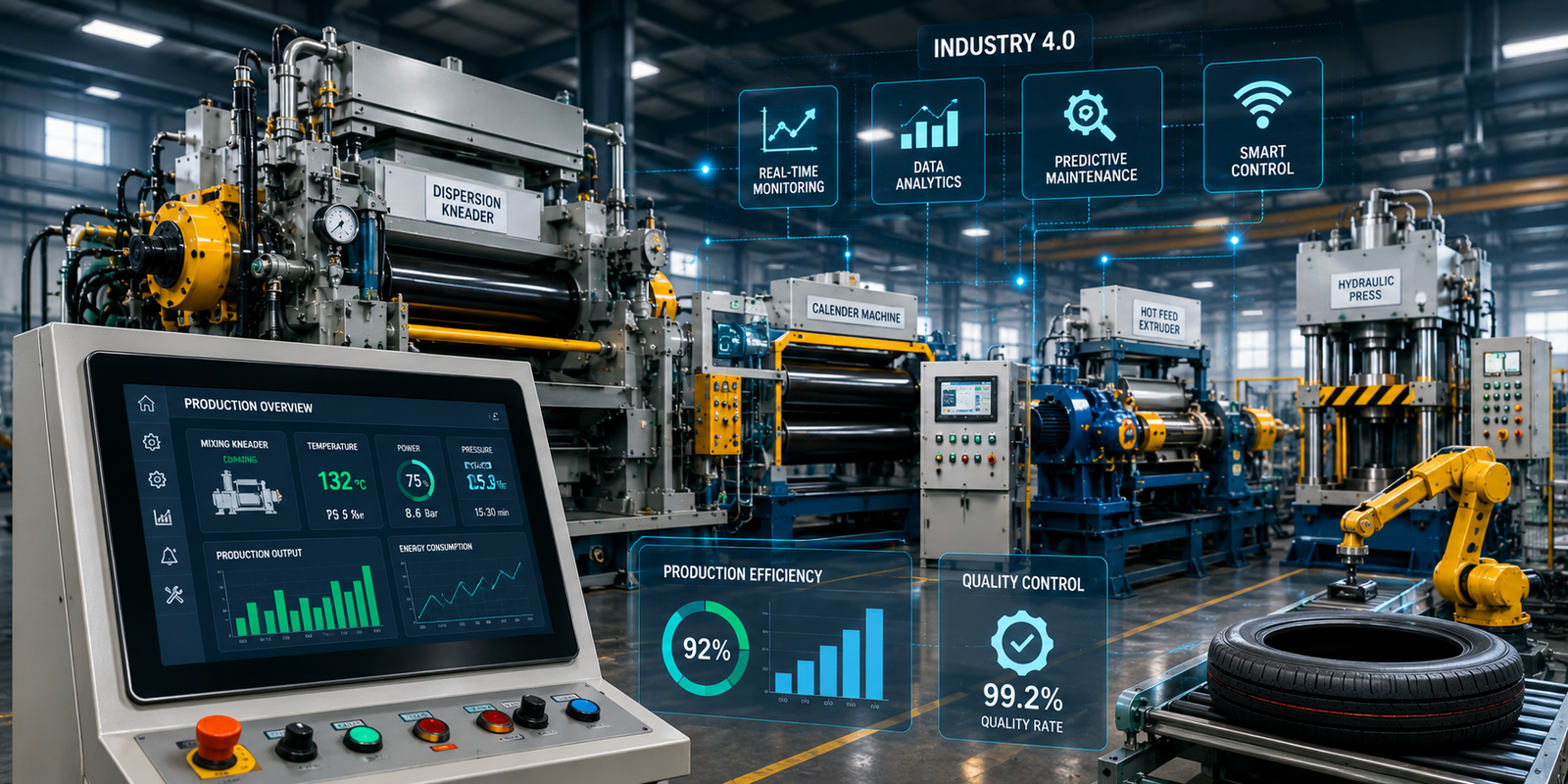
Dispersion Kneaders are designed for high-intensity mixing and efficient compound dispersion. These machines provide faster mixing cycles, superior compound consistency, controlled temperature processing, and improved production efficiency. They are widely used in tyre manufacturing, footwear production, industrial rubber goods, and specialty rubber compound applications.
Rubber Mixing Mills
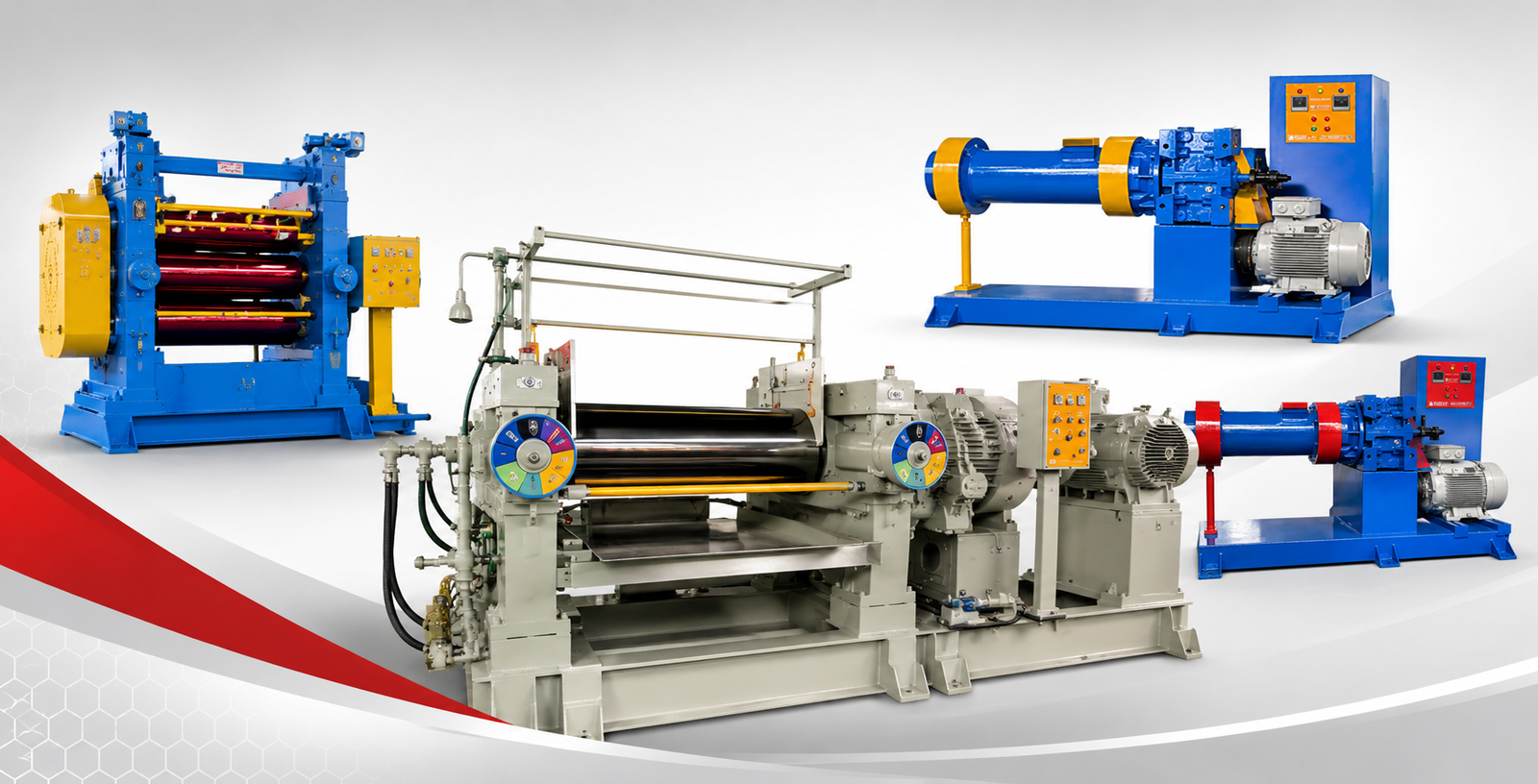
Rubber Mixing Mills are commonly used for sheeting, warming, refining, and final mixing operations. Modern mills feature heavy-duty chilled cast iron rolls, advanced lubrication systems, hydraulic nip adjustment, and enhanced safety systems. They remain an essential component of most rubber processing facilities due to their versatility and dependable performance.
📏 Importance of Precision Calendering
For manufacturers producing rubber sheets, coated fabrics, conveyor belts, and tyre reinforcement materials, calender machines are indispensable.
Modern Rubber Calender Machines provide accurate thickness control, superior surface finish, and consistent material distribution across the entire sheet width. Features such as precision roll crowning, automated nip adjustment, and advanced temperature control systems help manufacturers achieve higher product quality while minimizing material wastage.
Consistent calendering not only improves the appearance of the finished product but also ensures better performance in demanding industrial applications.
🚀 Selecting the Right Extrusion System
Extrusion is a vital process for manufacturing rubber profiles, tubes, hoses, treads, strips, and numerous industrial components.
Hot Feed Rubber Extruders
Hot Feed Extruders process pre-heated rubber compounds and offer several advantages, including high production output, consistent extrusion pressure, excellent surface finish, and reliable dimensional accuracy.
The right extrusion system can significantly improve throughput while maintaining strict quality standards. Modern extruders are designed with optimized screw geometry, efficient drive systems, and advanced temperature control mechanisms to ensure smooth and continuous operation.
🔧 Hydraulic Presses for Molding Applications
Hydraulic Presses are extensively used for molding, curing, and forming various rubber products. These machines apply controlled pressure and temperature to achieve precise product dimensions and consistent quality.
Modern hydraulic presses feature programmable curing cycles, accurate pressure control, energy-efficient hydraulic systems, and advanced safety mechanisms. Available in a wide range of capacities, they can be customized according to the specific requirements of different manufacturing processes.
Investing in a well-engineered hydraulic press can improve production consistency, reduce cycle times, and enhance overall manufacturing efficiency.
♻ The Growing Importance of Rubber Recycling
As industries continue to focus on sustainability and cost optimization, rubber recycling has become an increasingly important segment of the manufacturing sector.
Rubber Recycling Plants enable manufacturers to process waste rubber into reusable reclaim rubber, reducing environmental impact and lowering raw material costs. These facilities typically include equipment such as cracker mills, grinder machines, refiners, strainers, and autoclaves.
By incorporating recycling capabilities into their operations, manufacturers can improve resource utilization while supporting environmentally responsible production practices.
📋 Key Factors to Consider Before Investing
Selecting the right machinery requires careful evaluation of multiple factors that directly influence long-term performance and return on investment.
Production Capacity
Choose machinery capable of meeting current production requirements while providing sufficient flexibility for future growth.
Machine Construction
Heavy-duty construction ensures greater durability, reduced vibration, improved stability, and longer operational life.
Automation Capabilities
Modern PLC-based controls, touch-screen interfaces, and automated monitoring systems help improve efficiency and reduce operator dependency.
Energy Efficiency
Energy-efficient motors, optimized hydraulic systems, and intelligent control technologies contribute to lower operating costs.
Maintenance Requirements
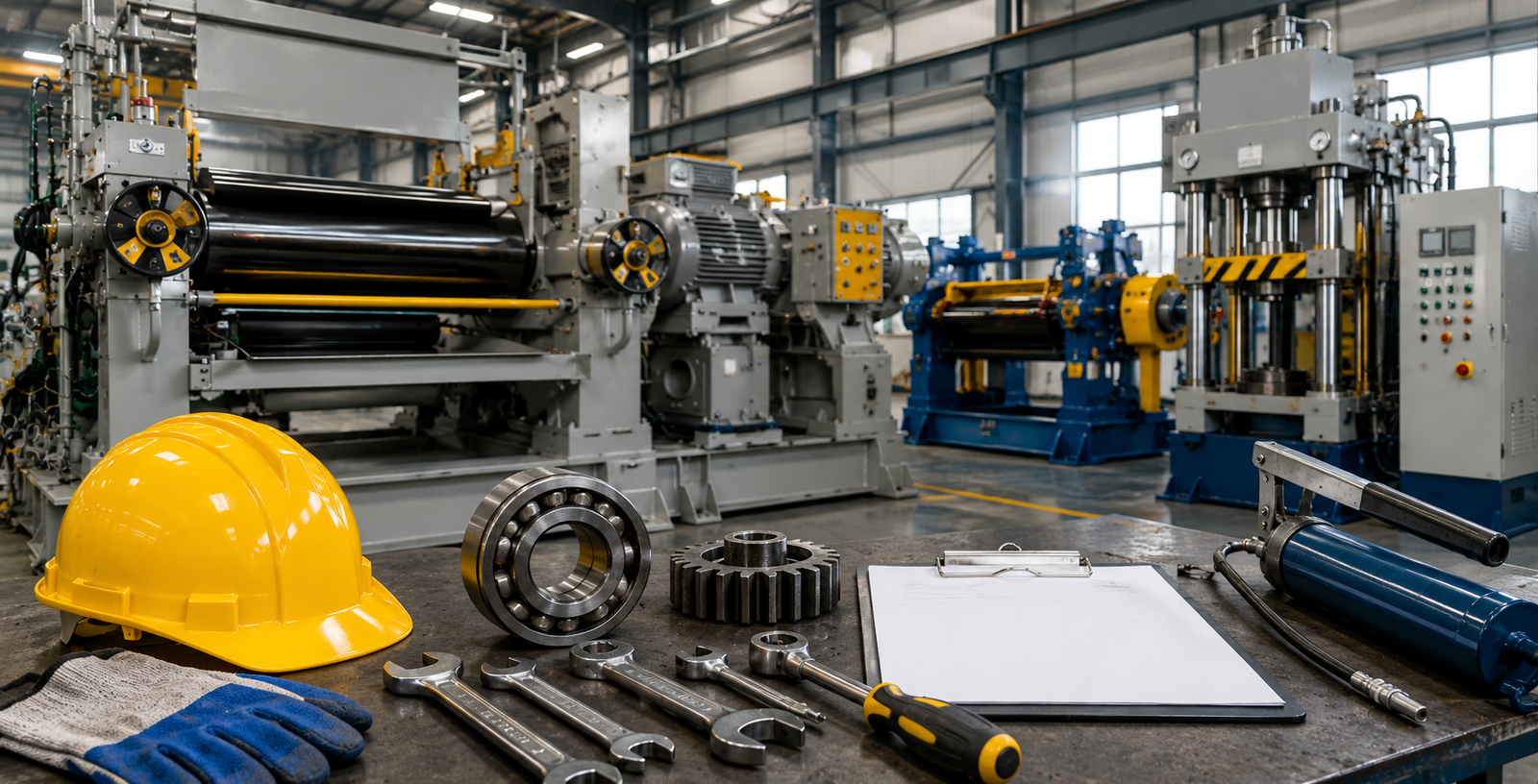
Machines designed for easy maintenance help reduce downtime and improve overall productivity.
After-Sales Support
Reliable technical support, spare parts availability, and engineering assistance are essential for ensuring uninterrupted operations.
💻 The Role of Advanced Design Technology
Today’s leading rubber machinery manufacturers utilize advanced engineering software such as SolidWorks to design and optimize machine performance.
Computer-aided engineering enables manufacturers to improve structural strength, optimize material flow, enhance component alignment, and reduce operational stresses. This results in machinery that is more reliable, efficient, and capable of delivering superior long-term performance.
Advanced design technology also allows for better customization, ensuring that machinery can be tailored to specific production requirements.
🎯 Why Engineering Quality Matters
Many manufacturers focus primarily on initial equipment costs when making purchasing decisions. However, the true value of industrial machinery lies in its long-term reliability, efficiency, maintenance requirements, and production performance.
Precision-engineered machinery offers numerous benefits, including:
- Longer service life
- Reduced maintenance costs
- Higher production consistency
- Better energy efficiency
- Increased uptime
- Improved product quality
Investing in quality machinery often results in substantial savings over the lifetime of the equipment.
✅ Conclusion
Choosing the right rubber processing machinery is one of the most important decisions for any manufacturing business. From mixing and extrusion to calendering, molding, and recycling, every machine plays a critical role in determining production efficiency and product quality.
Manufacturers should focus on proven engineering, heavy-duty construction, modern automation, energy efficiency, and dependable after-sales support when evaluating equipment options. By investing in precision-engineered machinery designed for long-term performance, businesses can improve productivity, reduce operating costs, and maintain a competitive advantage in the evolving rubber manufacturing industry.
At Premier Rubber Machinery, we combine decades of manufacturing expertise with modern engineering technology to deliver reliable, high-performance solutions that help rubber manufacturers achieve sustainable growth and operational excellence.